Teej food splits into two categories that most roundups blur together: what you eat while fasting, and what you eat once the fast breaks. This list keeps both straight, with four vrat-friendly savoury snacks for fasting days and four traditional sweets for the meal after.
That distinction matters more for Teej than for most festivals. Hartalika Teej involves a strict nirjala fast for many women, one that runs from sunrise to sunrise with no food or water in between, while other Teej observances allow fruit and specific flours through the day. A dish made with regular wheat or besan doesn’t work on a fasting day even if it’s traditionally “Teej food,” so this list marks each item accordingly.
Key Takeaways
- Four snacks here work for fasting days and use vrat-approved ingredients like buckwheat flour, sabudana, water chestnut flour and foxnuts.
- Four are traditional sweets meant for after the fast, including ghevar and malpua, both of which use regular flour.
- Sattu, roasted gram flour, isn’t vrat-appropriate for a strict fast but is a common pre-fast or morning-after food in Bihar and Jharkhand homes.
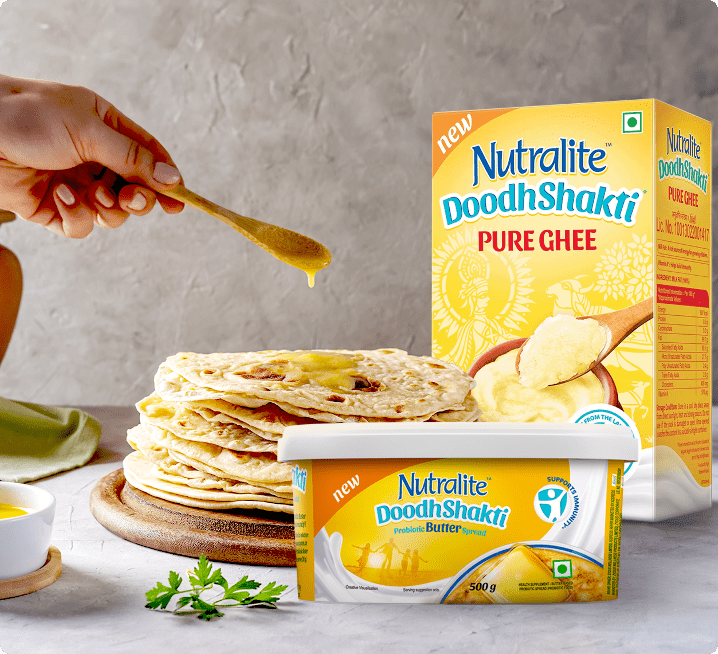
- Nutralite Doodhshakti Pure Ghee covers the frying and roasting across most items on this list, including the ghee ghevar traditionally needs.
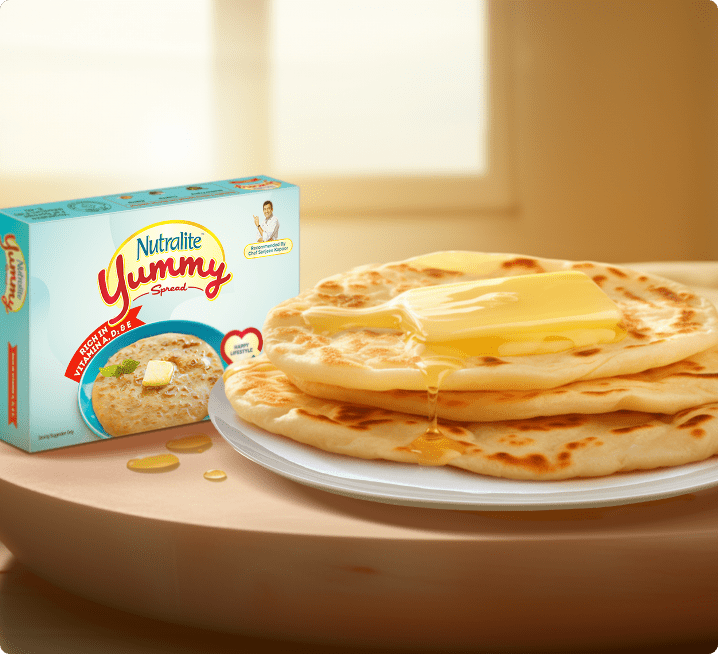
- Nutralite Doodhshakti Probiotic Butter Spread works well for pan-searing instead of deep frying, and for greasing hands while shaping ladoo.
8 Sweet and Savoury Teej Snacks to Make at Home
1. Ghevar (Best After the Fast)
- Deep fry the batter in Nutralite Doodhshakti Pure Ghee to build the honeycomb texture.
- Soak briefly in sugar syrup.
- Top with rabri or dry fruit.
It’s labour-intensive enough that most households buy it rather than make it, but a fresh batch you make at home with good ghee is a different thing entirely.
2. Malpua (Best After the Fast)
- Mix a batter of flour, milk and a little semolina.
- Fry into small discs in Nutralite Doodhshakti Pure Ghee until the edges turn crisp.
- Dip in cardamom-flavoured sugar syrup.
It’s quicker than ghevar and doesn’t need any special equipment, which makes it a realistic option even on a busy Teej evening.
3. Coconut and Jaggery Ladoo (Vrat-Friendly)
- Roast desiccated coconut in Nutralite Doodhshakti Pure Ghee.
- Mix in melted jaggery and a pinch of cardamom.
- Shape into balls while the mixture is still warm.
No grain flour goes into this one, which is why it stays a safer bet on a fasting day compared to besan or wheat-based sweets.
4. Sattu Ladoo (Best for the Pre-Fast Meal or Morning After)
This is the sattu recipe for Teej worth keeping around.
- Roast sattu lightly in Nutralite Doodhshakti Pure Ghee.
- Mix in melted jaggery.
- Shape into small balls while still warm, greasing your palms with Nutralite Doodhshakti Probiotic Butter Spread so the mixture doesn’t stick.
Sattu is roasted gram flour, so it’s grain-based and not appropriate for a nirjala fast. Most people eat it as an energy-dense food the morning fasting starts, or the morning after.
5. Kuttu ka Cheela (Vrat-Friendly)
Buckwheat flour, technically a fruit seed rather than a grain, is one of the most common vrat-approved flours.
Serve with a vrat-friendly coconut or peanut chutney.
6. Sabudana Vada (Vrat-Friendly)
- Soak sabudana overnight.
- Mash with boiled potato, roasted peanuts and rock salt.
- Pan-sear in Nutralite Doodhshakti Pure Ghee instead of deep frying.
It stays one of the most reliable fasting snacks because it’s filling enough to get through a long fasting day without feeling heavy.
7. Singhare ke Atte Pakode (Vrat-Friendly)
- Mix water chestnut flour with mashed potato, green chilli and rock salt into a thick batter.
- Shape into small patties.
- Pan-sear rather than deep fry.
This is a lighter take on a snack that’s usually swimming in oil, without dropping it from the vrat-approved list.
8. Roasted Makhana Namkeen (Vrat-Friendly)
- Roast foxnuts in Nutralite Doodhshakti Pure Ghee until crisp.
- Season with rock salt and a little black pepper.
It keeps in an airtight container for days, which makes it the easiest of the eight to prep ahead of the fasting day itself.