Makhan mishri, fresh white butter folded with crushed rock sugar, is the prasad tied most closely to Krishna Janmashtami, and it takes roughly four minutes to put together. The ten janmashtami prasad recipes below grow outward from that one bowl: classic makhan mishri, dhaniya panjiri, makhane ki kheer, mishri mawa peda, gopalkala, besan ladoo, sooji sheera, nariyal ladoo, makhan malpua, and a toast version for anyone cooking alone at 11 pm.
Krishna Janmashtami 2026 falls on Friday, 4 September. Nishita Kaal, the midnight window marking Krishna’s birth, opens at 11:57 PM and closes at 12:43 AM, which is when most households place the bhog thali before the deity.
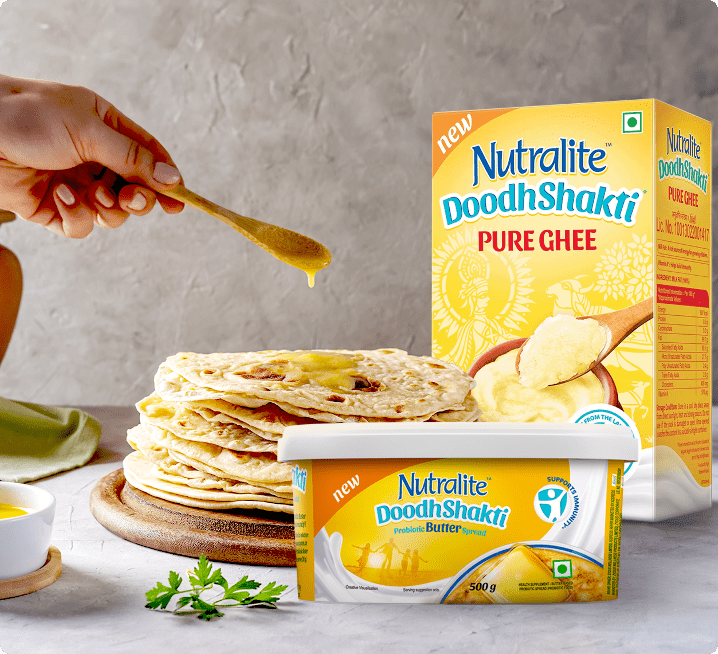
Each recipe here uses Nutralite Doodhshakti Pure Ghee, Nutralite Doodhshakti Cow Ghee or Nutralite Doodhshakti Probiotic Butter Spread. The ghee comes from milk sourced from the land of Braj.
Key Takeaways
- Makhan mishri needs two ingredients and zero cooking, which makes it the simplest prasad for janmashtami.
- Krishna Janmashtami 2026 falls on Friday, 4 September, and the Nishita Kaal puja window runs past midnight.
- Panjiri, kheer, peda, ladoo and malpua all qualify as traditional janmashtami bhog, though the specific dish shifts by region.
- Nutralite Doodhshakti Pure Ghee is made with milk sourced from the land of Braj, the region where Krishna spent his childhood.
- Nutralite Doodhshakti Probiotic Butter Spread packs 100 million probiotic bacteria into every 10g serving.
- Six of these ten janmashtami prasad items finish inside twenty minutes.
- Tulsi leaves complete the bhog. Many families treat the offering as incomplete without them.
Why does Krishna get makhan mishri on Janmashtami?
Krishna earned the name Makhan Chor as a toddler in Gokul, raiding the clay pots of butter that the gopis hung from ceiling ropes. The stories are specific about it. He shared the loot with his friends and the monkeys, he lied about it charmingly, and his mother Yashoda tied him to a grinding mortar for it.
So the offering repeats the theft, willingly this time. Mishri gets crushed into the makhan because rock sugar was the everyday sweetener of Braj households long before refined sugar arrived in Indian kitchens. Add a tulsi leaf on top. That single leaf converts food into prasad.
10 makhan mishri inspired janmashtami prasad recipes
1. Classic Makhan Mishri
The original bhog for janmashtami. Nothing else on the thali carries the same weight.
- Whip 4 tbsps. Nutralite Doodhshakti Probiotic Butter Spread with a fork until it turns pale and airy. It tastes exactly like butter, with 100 million probiotic bacteria in every 10g serving.
- Crush 2 tbsps. mishri coarsely. Leave a few larger crystals in for crunch.
- Fold, do not stir. Shape into a small mound, press a tulsi leaf on top, chill for ten minutes.
2. Dhaniya Panjiri
Uttar Pradesh serves this at midnight, right after the aarti. Coriander powder replaces flour, so vrat rules stay intact.
- Roast 1 cup coriander powder in 3 tbsps. Nutralite Doodhshakti Pure Ghee on low heat. Nine minutes, maybe ten. The colour should deepen without darkening.
- Toss in 1/2 cup crushed makhana, 2 tbsps. chopped almonds, 1 tbsp. melon seeds, 1 tbsp. grated dry coconut.
- Kill the flame. Cool completely, then mix in 1/2 cup powdered mishri. Hot panjiri plus mishri gives you a sticky mess.
3. Makhane ki Kheer
Fox nuts swell in milk and turn silky. The kheer thickens without a spoonful of cornflour or condensed milk.
- Roast 1 cup makhana in 2 tbsps. Nutralite Doodhshakti Cow Ghee until crisp. The ghee brings a granular daanedar texture and an indulgent aroma to the pan.
- Simmer 1 litre full fat milk down by a third. Stir often, scrape the sides.
- Crush half the makhana, drop everything in, cook eight more minutes. Sweeten with 1/2 cup mishri powder off the heat. Cardamom last.
4. Mishri Mawa Peda
Peda holds its shape for two days, which helps when guests keep arriving through the evening.
- Crumble 250g mawa into a heavy pan with 1 tbsp. Nutralite Doodhshakti Cow Ghee. Cook on low, ten to twelve minutes, stirring constantly.
- The mawa turns glossy and starts leaving the sides. Pull it off the heat there.
- Cool until warm, work in 1/2 cup fine mishri powder and 1/4 tsp. cardamom, then roll into rounds and thumb a groove into each one. Press a pistachio sliver in.
5. Gopalkala
Maharashtra’s dahi handi day dish. Krishna and his friends pooled whatever they carried and ate it together, which is exactly what gopalkala is.
- Rinse 1 cup thick poha, drain hard, rest for ten minutes.
- Add 1 cup fresh curd, 1/2 cup grated cucumber, 1 chopped green chilli, 2 tbsps. grated coconut, salt, a pinch of mishri powder.
- Temper 1 tbsp. Nutralite Doodhshakti Cow Ghee with cumin and curry leaves. Pour it over. Serve cold, never warm.
6. Besan Ladoo
The besan ladoo lives or dies on the roast. Rush it and the whole batch tastes raw.
- Roast 2 cups besan in 3/4 cup Nutralite Doodhshakti Pure Ghee. Twenty minutes on low flame. The aroma announces itself well before the colour changes.
- Cool the mixture until you can hold it comfortably.
- Add 1 cup powdered mishri or boora, 1/2 tsp. cardamom, chopped cashews. Grip, press, roll.
7. Sooji ka Sheera
Twenty minutes total. Every temple in the country makes some version of it.
- Roast 1 cup sooji in 1/2 cup Nutralite Doodhshakti Pure Ghee until it smells nutty and turns sandy.
- Boil 3 cups water with 3/4 cup mishri powder and a few saffron strands, then pour it in slowly. Stand back, the pan spits.
- Stir till it pulls away clean. Rest it covered for five minutes. Fried cashews and raisins go on last.
8. Nariyal Ladoo
Three ingredients, no thermometer, no sugar syrup stage to get wrong.
- Warm 2 tbsps. Nutralite Doodhshakti Probiotic Butter Spread in a pan. Tip in 2 cups desiccated coconut.
- Pour in 1 cup condensed milk. Cook six minutes till the mixture gathers into a single mass.
- Cool slightly, roll into balls, dust with extra coconut. Push a crystal of mishri into the centre of each for a small surprise.
9. Makhan Malpua
Malpua belongs to the janmashtami special sweets list across Rajasthan, Bihar and Odisha. The batter needs an overnight rest.
- Whisk 1 cup maida, 1/2 cup mawa, 1 tbsp. Nutralite Doodhshakti Probiotic Butter Spread and enough milk for a pouring consistency. Rest the batter for six hours.
- Boil 1 cup mishri with 1/2 cup water into a one string syrup. Cardamom and saffron in.
- Fry small ladlefuls in Nutralite Doodhshakti Pure Ghee on medium flame. Edges go lacy and brown. Dunk each malpua straight into warm syrup for thirty seconds.
10. Five Minute Makhan Mishri Toast
For the bachelor kitchen at 11:40 PM with the puja starting soon.
- Toast two slices of bread. Slightly stale bread works better here.
- Spread Nutralite Doodhshakti Probiotic Butter Spread generously while the toast is hot. It supports good digestion and gut health.
- Scatter crushed mishri, add a tulsi leaf, offer, eat. Nobody is judging the shape of your prasad.
How to arrange the janmashtami bhog thali
- Place makhan mishri at the centre. It anchors the plate.
- Ring it with one sweet, one dry offering and one liquid. Peda, panjiri and kheer cover all three.
- Keep a small copper pot of panchamrit on the side. Milk, curd, ghee, honey, mishri.
- Add a tulsi leaf to every single item, not just the makhan.
- Offer at Nishita Kaal, then distribute. Prasad sitting overnight loses its purpose.
Which prasad options work when you cook alone?
Recipes 1, 8 and 10 need one pan between them. A bachelor kitchen with two burners and no mixer still handles makhan mishri, nariyal ladoo and the toast comfortably. Skip malpua on a weeknight. The overnight batter rest defeats most people who start at 9 PM.
Buy mishri in the powdered form if grinding feels like a chore. Most kirana stores stock both.