Chhath Puja food follows stricter rules than almost any other Hindu festival. No onion, no garlic, no common salt in the prasad, no tasting while cooking, and pure ghee as the only fat anyone touches. Chhath Puja 2026 runs Friday 13 November through Monday 16 November, with Sandhya Arghya on Sunday 15 November. Eight satvik dishes sit below, led by thekua, along with where Nutralite Doodhshakti Pure Ghee belongs in each.
Most festival food guides treat purity as a vague idea. Chhath treats it as a procedure. Households scrub a fresh mud chulha, burn mango wood in it, and keep the prasad kitchen shut to anyone who hasn’t bathed. That level of discipline decides the ingredient list long before anyone picks a recipe.
Key Takeaways
- Chhath Puja 2026 runs from November 13–16, celebrating devotion through traditional rituals and satvik food.
- Thekua is the signature prasad, made with wheat flour, jaggery, and pure ghee.
- Traditional Chhath prasad excludes onion, garlic, and common salt, following specific satvik cooking practices.
- Nutralite Doodhshakti Pure Ghee complements traditional Chhath recipes with its milk sourced from the land of Braj.
What makes Chhath Puja food satvik?
Satvik cooking across India drops onion, garlic and anything fermented, on the reasoning that these foods agitate the mind. Chhath takes that baseline and tightens it considerably further.
Households set up a separate prasad kitchen for the four days, usually around a freshly plastered earthen chulha fuelled with mango wood. Brass and earthen vessels do the cooking, kept aside from everyday utensils. Whoever cooks bathes first and works barefoot, and nobody tastes a single grain while the prasad comes together, because the sun receives the offering before any human mouth does. That one rule shapes the entire approach to seasoning, since a cook working blind needs recipes forgiving enough to survive without correction partway through.
Common salt stays out of the prasad altogether. Rock salt, sendha namak, appears only in the Nahay Khay meal on day one, and everything prepared after that draws its taste from jaggery instead. Jaggery also does something refined sugar cannot, lending the prasad a darker, slightly mineral sweetness that holds up against the ghee.
The four days and what each one brings
The sequence matters as much as the recipes, because each day’s food serves a specific purpose in a fast that gets progressively harder.
Nahay Khay, Friday 13 November.
The household cleans thoroughly, the vrati bathes in a river or at home, and everyone eats one simple satvik meal together. Kaddu-bhat usually carries this day. Nothing here is celebratory, since the point is to enter the next three days with a settled stomach.
Kharna, Saturday 14 November.
The vrati fasts through daylight and breaks it after sunset with rasiya and roti, eaten in near silence while the household waits. The moment that meal ends, the thirty-six hour nirjala fast begins, without food or water.
Sandhya Arghya, Sunday 15 November.
The main evening. Families carry soop baskets loaded with thekua, fruit, sugarcane and coconut to the riverbank and offer them to the setting sun while standing waist-deep in water.
Usha Arghya, Monday 16 November.
Offerings go to the rising sun the next morning, and the fast ends immediately afterwards with something deliberately gentle.
8 satvik Chhath Puja foods prepared with pure ghee
Each dish below belongs to a particular day, so the list follows the festival’s own order rather than any ranking of difficulty.
Thekua
Thekua is the dish everyone associates with Chhath, and it earns that position through sheer practicality. Whole wheat flour takes a generous ghee moyan rubbed through it until the mixture holds together when pressed, then jaggery dissolved in warm water binds the dough. Fennel seeds, cardamom and grated dry coconut go in across most households, though the proportions shift across households. The dough stays deliberately stiff, far firmer than roti dough, because a soft dough collapses in hot ghee.
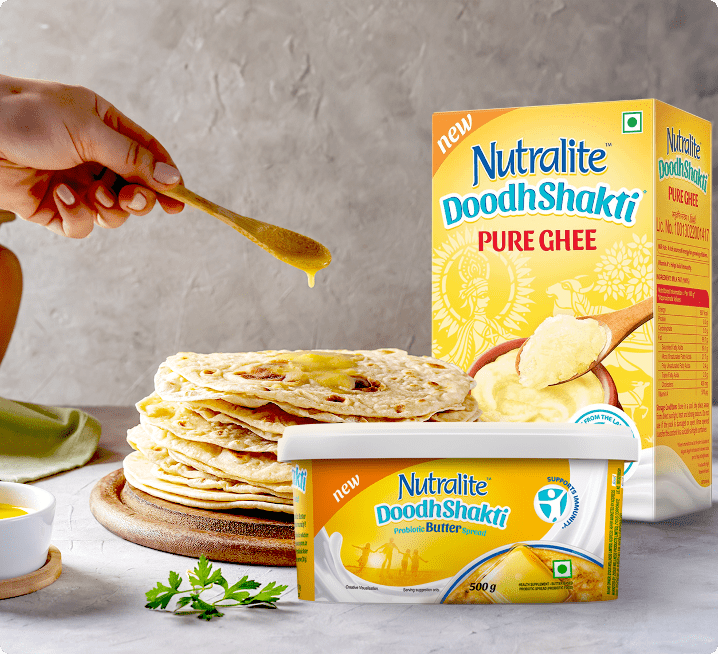
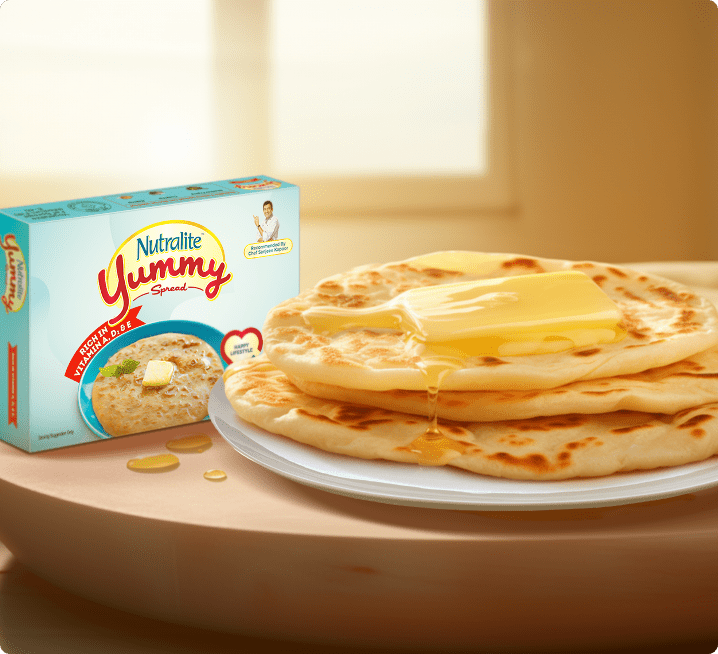
Cooks press each portion into a carved wooden mould called a thekua saancha, which stamps the ridged pattern onto the surface, or shape it by hand and score the top with a fork. Fry the pieces in Nutralite Doodhshakti Pure Ghee over a low flame, which matters more here than in almost any other fried sweet. Jaggery browns quickly, so a hot kadhai darkens the outside long before the centre cooks through. Nutralite Doodhshakti Pure Ghee draws its milk from the land of Braj.
A properly fried thekua stays crisp for a week or longer without refrigeration, which explains how a sweet made days in advance became the prasad carried to the riverbank.
Kaddu-Bhat
The Nahay Khay meal sets the tone for everything after it. Bottle gourd or pumpkin cooks down with soaked chana dal, tempered in ghee with cumin and a pinch of ajwain, and rice goes alongside. Sendha namak provides the only seasoning, and no onion or garlic comes anywhere near the pot.
The simplicity is the design. A vrati about to attempt thirty-six hours without water needs a meal that digests cleanly and leaves no heaviness behind, which is why households resist the urge to make this day’s food more interesting than it needs to be.
Rasiya
Kharna evening belongs to rasiya, a rice kheer sweetened entirely with jaggery. Rice simmers in full-fat milk until the grains break down and the milk thickens noticeably, a process that takes a good thirty minutes on low heat and rewards patience.
Jaggery goes in only after the pot comes off the flame. Add it to boiling milk and the acidity splits the whole batch, which is the single most common way this dish fails. Stir a spoon of Nutralite Doodhshakti Cow Ghee through at the end. It brings a daanedar texture and an indulgent aroma, both of which come forward as the rasiya cools and thickens further.
Tradition holds that the vrati eats this meal alone and in silence, and that the plate must go back empty, so households portion it carefully.
Kharna Roti
Plain wheat chapati accompanies the rasiya, made without salt and without any stuffing. Brush ghee across the surface after it comes off the tawa rather than cooking it in, which keeps the roti soft without making it heavy.
Two items, one meal, and then thirty-six hours of nothing at all. The restraint on this plate is intentional.
Chawal ke Laddu
Also called kasar, this laddu belongs specifically to Chhath kitchens across Bihar, Jharkhand and eastern Uttar Pradesh. Rice flour roasts in ghee until it smells distinctly nutty and shifts a shade darker, which takes around fifteen minutes of continuous stirring on low heat.
Jaggery syrup binds the roasted flour, and the mixture then needs shaping while it still holds warmth. Let it cool and the laddu refuses to hold together, so most households roll the entire batch in one unbroken stretch of work.
Khajuria
Khajuria sits close to thekua in ingredients yet lands somewhere completely different in texture, flaky and crisp where thekua is dense. The difference comes down to the moyan, the quantity of ghee rubbed into the flour before any liquid touches it.
Work in enough ghee that a fistful of flour holds its shape when squeezed. Skip that step or rush it, and the khajuria turns hard rather than flaky, which is the usual disappointment when this one goes wrong.
Pua
Pua brings wheat flour and jaggery together in a thin, pourable batter that benefits from resting half an hour before frying. Ladle small rounds into hot ghee and let the edges spread and go lacy before turning them.
Bihar and eastern Uttar Pradesh both prepare pua during Chhath, and the recipe barely changes across the two regions, though some households add a spoonful of semolina for extra crispness at the rim.
Dahi-Chura
Monday morning, once Usha Arghya finishes, the fast ends on flattened rice with fresh curd and jaggery, sometimes with sliced banana folded through. No stove comes on at all.
After thirty-six hours without food or water, something cold, light and faintly sweet suits the body far better than anything fried, which is exactly why this combination closes the festival rather than opening it.