Mahashivratri is a night for prayer, calm and simple offerings. Food for the festival is not a monolith. It changes from place to place, from Punjab to Tamil Nadu, and from Gujarat to Assam. Families prepare Mahashivratri thali that follows fasting rules and the tastes they grew up with. The result is a rich range of Mahashivratri food that tells stories of place, season and memory.
Mahashivratri has a special relationship with food
On this day food is an act of devotion and a practical way to keep energy up while fasting. People keep spices gentle and choose satvic ingredients. Prasad is shared with neighbours and family. The rules and the everyday pantry decide what appears on the plate.
North India: Buckwheat, milk and simple kheer
Many homes in the north serve kuttu ki roti and potato dishes as Mahashivratri vrat food. Milk based desserts are common. Kheer or rabdi is served in small bowls as Mahashivratri prasad at home and at many temples. A little pure ghee on top gives aroma and a sense of ritual to otherwise simple dishes.
Maharashtra and Gujarat: Sabudana and peanuts
In Maharashtra and Gujarat, sabudana khichdi and sabudana vada are weekday favourites that turn up again on Shivratri. Potatoes, roasted peanuts and a dash of lemon make the dishes filling without breaking the fast. These items are typical Mahashivratri fasting food and are easy to carry when taking prasad to the temple.
South India: Rice, coconut and steamed delights
In the south you will find rice based offerings, coconut sweets and milk based prasad. Small steamed cakes and coconut laddoos appear on the Mahashivratri thali. The textures are lighter and the flavours are gentle, which suits the all night vigil.
East and Northeast: Pithas, rice cakes and local sweets
In eastern states the festival menu leans on rice and local sweet preparations. Pithas, a mild kheer and steamed rice cakes are common Mahashivratri vrat recipes. These dishes show how local grain and sweetening choices shape the prasad.
Simple Shivratri vrat recipes to try
Here are three shivratri vrat recipes that work in many homes.
Sabudana khichdi
Soak 1 cup sabudana for 4 to 6 hours. Drain. Sauté 1 cup boiled, diced potato with 2 tablespoons roasted peanuts and a teaspoon of cumin. Add sabudana and cook until translucent. Finish with lemon and coriander.
Kuttu ki roti with mashed spiced potato
Combine 1 cup buckwheat flour with hot water to make a soft dough. Roll between sheets of plastic and cook on a hot tawa. Serve with mashed potato tempered with cumin and mild spices.
Fruit and milk prasad
Warm 1 cup milk and stir in chopped seasonal fruit and a teaspoon of jaggery or honey. Serve warm or chilled.
These Mahashivratri vrat recipes are flexible. Scale them for two or for twenty.
Sweets for Mahashivratri and prasad ideas
Sweets for Mahashivratri usually avoid deep-frying and heavy sugar syrups. Small portions of kheer, coconut laddoos, lightly sweetened laddoos made from flours permitted during the fast and fruit with milk are common choices. Keep portions modest when you prepare prasad so everyone can take a small portion after the prayers.
Simple fasting tips for the big day
Plan a balanced Mahashivratri thali that gives steady energy. Use lightly spiced preparations and avoid too much oil. Make prasad in small batches so it stays fresh for the night of worship. If you are offering food to others, label dishes where possible because some fast observers follow stricter rules than others.
Nutralite Doodhshakti Ghee – Festive cooking with a smile
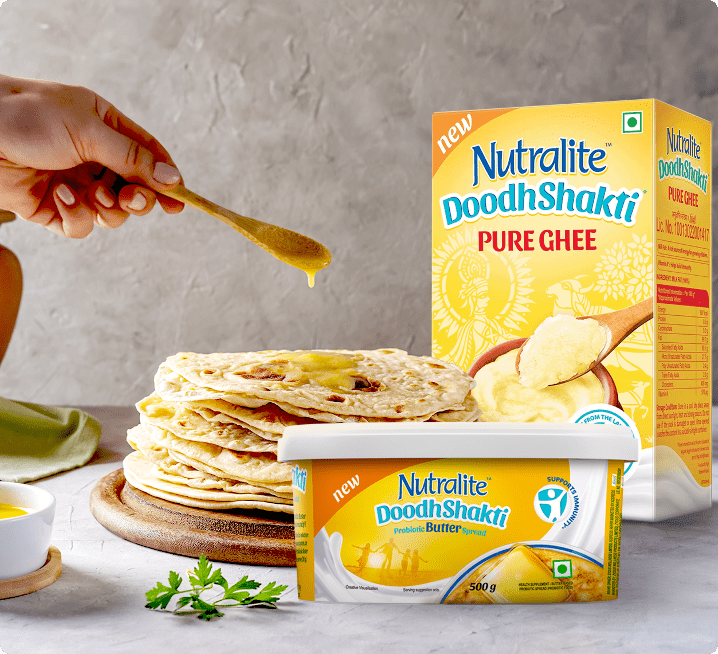
Ghee is central to many Mahashivratri food traditions. It brings aroma, a round mouthfeel and a sense of ceremony to simple dishes. Nutralite’s Doodhshakti range supports that tradition. Nutralite Doodhshakti Pure Ghee and Nutralite Doodhshakti Cow Ghee are made from creamy milk sourced from the land of Braj. These ghees are enriched with vitamin A and provide a reliable source of energy for children. When you are cooking with ghee, a spoonful changes the texture and flavour of kheer, gives sabudana khichdi a smooth mouthfeel and adds a comforting sheen to halwa. For families who want a consistent and traditional finish to their Mahashivratri vrat food, the Doodhshakti range is a simple, trustworthy choice.
Final thoughts
Mahashivratri shows how the same devotion becomes in many different kitchens. From buckwheat rotis in the north to sabudana plates in the west and coconut prasad in the south, regional habits shape the food of the festival. Try a new Mahashivratri vrat recipe this year. Use a quality ghee and notice how small choices change what you serve as prasad.